Your HR Tech platform built a hiring module your customers love. They post jobs, review candidates, and manage their recruitment pipeline entirely within your platform. Then, they start to grow.
Five roles per month becomes fifty, then five hundred, and the volume of interviews they’re booking means your platform just isn’t fit for scale. Suddenly, they're shopping for another ATS.
Most HR Tech platforms hit this retention cliff when their customers' hiring needs outpace what feels manageable inside their system. Here’s what’s actually happening, and how to overcome it:
Buyers are consolidating in 2026, and you might not make the cut
Hiring teams are tired of context-switching between systems, paying for overlapping functionality, and maintaining hacky workarounds for interview co-ordination that take them outside of their core hiring tool.
They want platforms that handle the entire job without forcing users to jump to external tools or copy-paste information between meeting invites, emails, and their applicant tracking information. Clunky scheduling interfaces and long email threads chasing availability just aren’t fit for purpose anymore.
If your product still relies on external tools or forces users out of your interface to complete essential tasks, you'll lose deals and renewals to competitors who give users an end-to-end experience.
Where platforms lose scaling customers
Most HR Tech platforms don't lose customers because their core features stop working. They lose them because essential workflows become bottlenecks as hiring volume increases.
Scheduling is the clearest example. At five roles per month, manual scheduling feels manageable. A recruiter can send a few meeting links without drowning in admin work.
At fifty or five hundred roles per month, scheduling breaks everything. Recruiters spend hours coordinating availability across multiple interviewers and time zones. Candidates wait days for interview confirmation. Hiring managers complain about calendar chaos, and ultimately lose quality candidates.
Your customer has two options: accept significant manual overhead and hire more coordinators, or adopt a standalone scheduling tool that pulls critical workflow steps outside your interface.
Both hurt retention. The first creates frustration with your platform's limitations. The second trains users to see your platform as incomplete, and opens the door to competitors.
Impact: Lower CSAT scores, extended time-to-hire, and account churn.
Solid scheduling infrastructure for retention
The platforms which are keeping customers through their hiring troughs and peaks have embedded scheduling functionality directly into their ATS that lets users schedule in a few clicks, not days.
Cronofy's scheduling and meeting infrastructure addresses this scaling challenge. Cronofy embeds directly into your platform's hiring workflow — your users never have to leave your interface to schedule interviews.
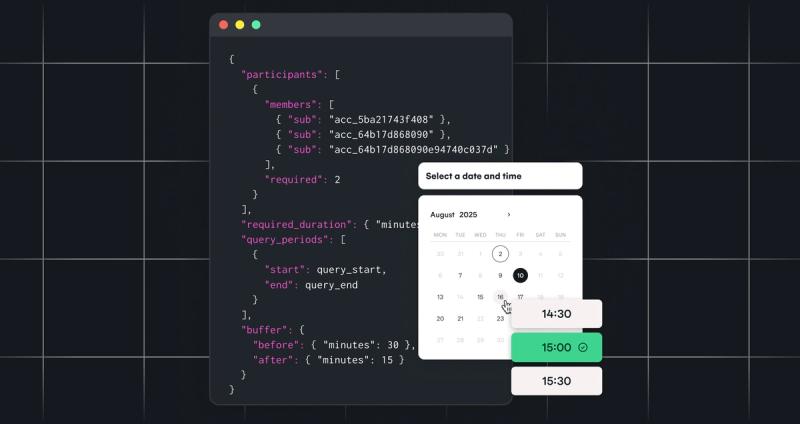
The infrastructure handles the complexity that emerges at scale: coordinating multiple interviewers across different calendar systems, managing time zone calculations automatically, triggering confirmation and reminder workflows, and simplifying rescheduling without manual coordination.
Cronofy is already the go-to scheduling provider for leading HR tech platforms like UKG, Personio, Teamtailor, Pinpoint, and more.
What customer retention looks like when scheduling just works
If they can schedule interviews smoothly in your hiring module, your customers' growth trajectory changes. A small team hiring sporadically schedules interviews with the same ease as an enterprise team running hundreds of interviews per week, no matter if it’s 1:1s or complex panel interviews. When buyers evaluate your platform or customers renew contracts in 2026, they're thinking about whether it can grow with them.
This keeps customers from churning when their hiring needs change. They shouldn’t be shopping for a more robust ATS, because your platform should already handles their volume, and they shouldn’t need a standalone scheduling tool if everything happens inside your system.
Impact: Higher retention rates and stronger expansion revenue as customers grow.
Build for the customer you'll have, not the one you have today
If you’re planning to keep your retention rates and expansion revenue up, it’s time to think long term.
The winners are opting for infrastructure that works at every stage of that growth curve. They embed the capabilities that customers will need at scale, so those customers never hit a ceiling that forces them to look elsewhere.
Scheduling infrastructure is at the heart of this. As hiring volume grows, it becomes the key differentiator between a platform that feels complete and one that feels like it's missing essential pieces.
In 2026, buyers will choose platforms that feel complete. Want to make sure yours is the one they stay with? Learn more about what Cronofy does for HR Tech here.